

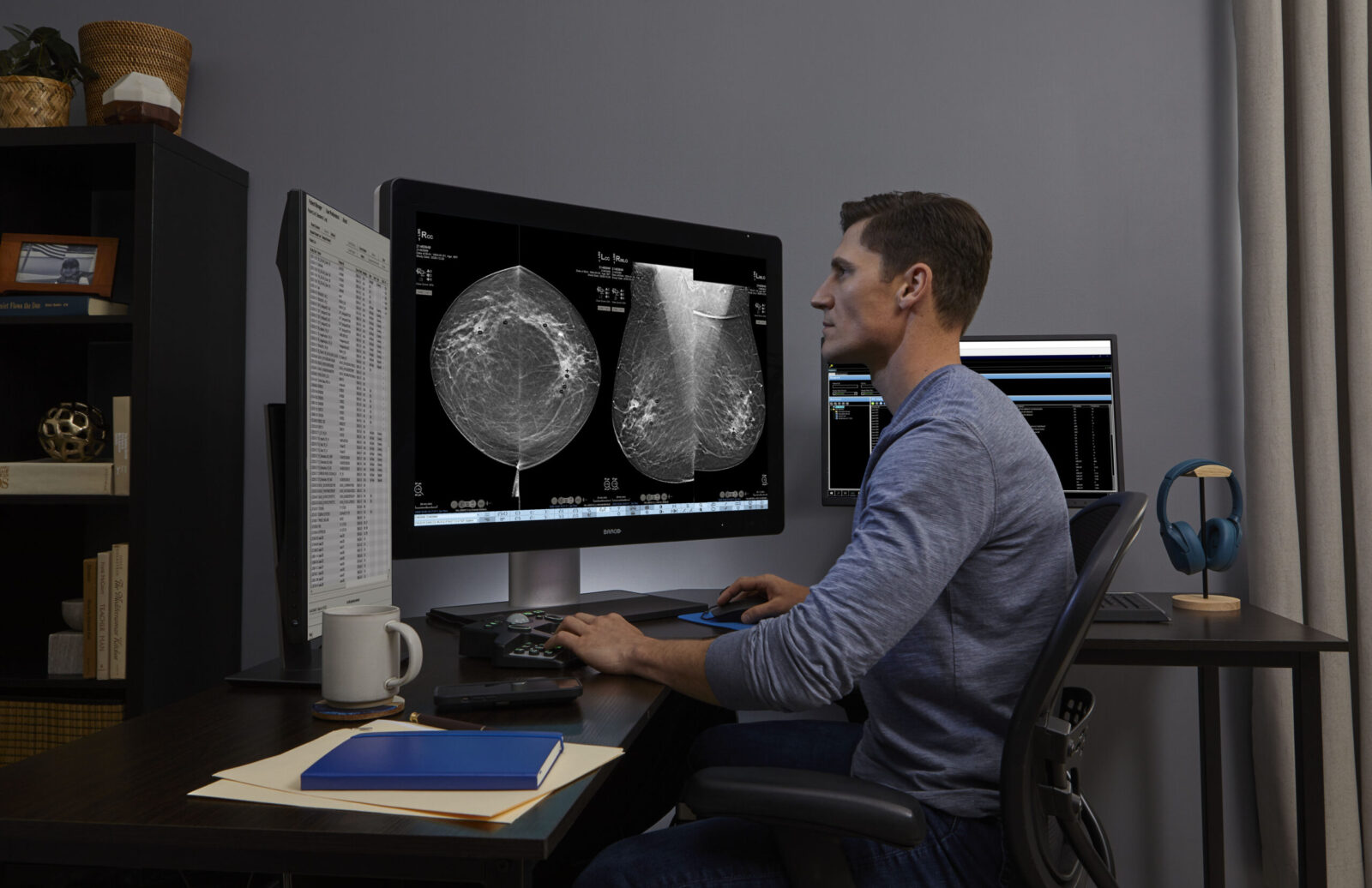
MARLBOROUGH, Mass. — Hologic, Inc. (Nasdaq: HOLX) said new research demonstrates that its AI-powered mammography technology can help identify breast cancers that were initially missed during routine screening.
Data from a retrospective study published in the American Journal of Roentgenology showed that Hologic’s Genius AI® Detection solution flagged approximately one-third of breast cancer cases that were originally interpreted as negative in a review of 7,500 digital breast tomosynthesis screening exams.
“At Hologic, we are constantly pushing ourselves to innovate and enhance the quality and reliability of our technologies,” said Mark Horvath, President of Breast and Skeletal Health Solutions. “This study underscores AI’s potential to uncover cancers that might otherwise remain hidden, while also giving us critical insights to guide the development of future innovations. As we continue to advance this technology based on customer and provider feedback, we’re excited to see its impact in real-world settings.”
The study was conducted by researchers at Massachusetts General Hospital in Boston and analyzed screening exams performed between 2016 and 2019. Among the 7,500 exams reviewed, 100 were classified as false-negative cases — mammograms initially read as negative that were followed by a breast cancer diagnosis within one year. The Genius AI Detection solution identified suspicious areas in 32 percent of these cases and correctly localized the region where cancer was later diagnosed.
In addition, of the 500 breast cancer cases that were correctly identified by radiologists at the time of screening, the AI technology flagged nearly 90 percent and accurately localized the cancer sites. The study found that the AI solution was more likely to flag invasive ductal carcinomas and lymph node-positive cancers, while it was less likely to identify invasive lobular carcinomas and grade I invasive carcinomas.
One example cited in the study involved a 54-year-old woman whose screening mammogram was initially interpreted as negative. Eleven months later, she returned to her physician after detecting a lump in her left breast and was diagnosed with grade 1 invasive ductal carcinoma. On retrospective review, the AI algorithm marked and correctly localized the area of concern on the original mammogram.
“In this study, not only did the AI identify the case as suspicious and warranting additional review, but it also correctly localized the region of interest,” said Manisha Bahl, MD, MPH, Associate Director of Quality for Breast Imaging at Mass General Brigham and Associate Professor of Radiology at Harvard Medical School. “While additional research is needed, these findings are promising and highlight AI’s tremendous potential to redefine breast cancer detection in the years ahead.”
The researchers noted several limitations, including that the study was conducted at a single academic medical center with a predominantly Caucasian patient population and used Hologic’s Genius AI Detection 2.0 software. As a result, the findings may not be generalizable to other clinical settings or AI algorithms. The study also did not assess the impact of AI on patient outcomes or its integration into routine clinical workflows.