

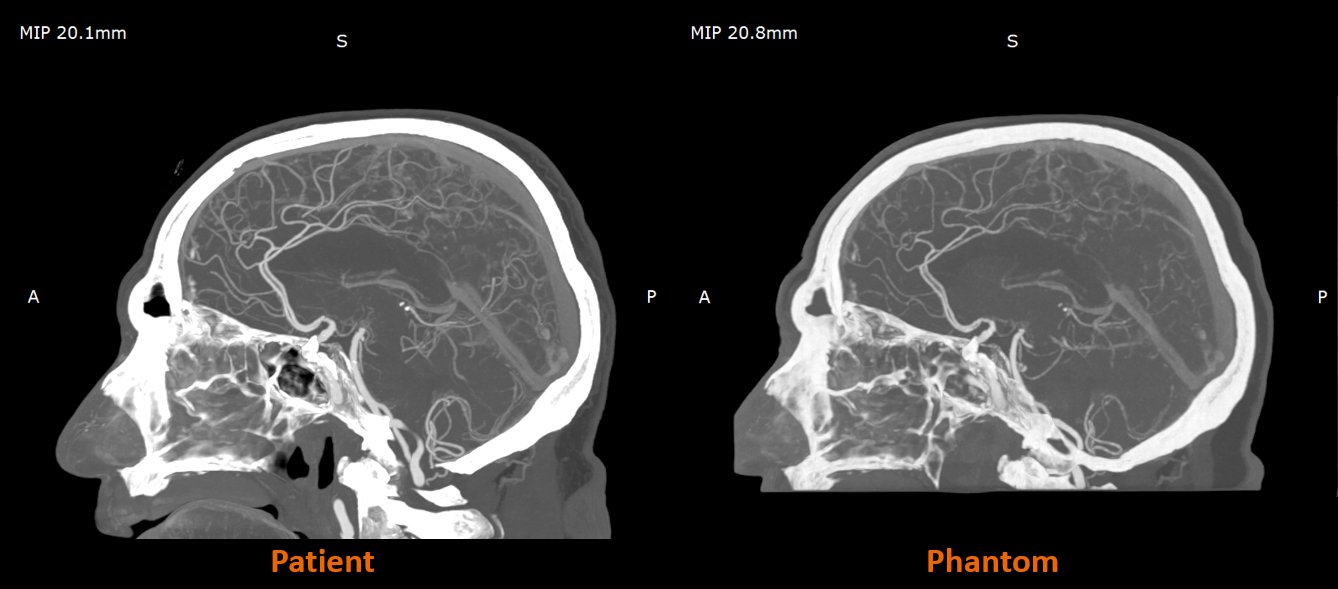
MINNETONKA, Minn. & REHOVOT, Israel — Stratasys Ltd. has expanded commercial availability of its RadioMatrix radiopaque 3D printing material to healthcare providers, manufacturers and research institutions across the United States. The announcement marks the first time U.S. users can broadly access a material designed to deliver tunable, consistent radiopacity for X-ray–based imaging applications.
RadioMatrix is the first 3D printing material engineered to offer precise control over radiopacity, enabling production of patient-specific anatomical models with predictable visibility on CT and other X-ray imaging systems. Stratasys developed the material to support more advanced medical imaging workflows, and its performance has been validated in studies conducted with Siemens Healthineers. According to the company, the collaboration demonstrated that RadioMatrix phantoms can replicate human tissue with deviations as low as single Hounsfield units in key structures such as grey matter and vasculature.
Stratasys said the material is already showing impact in early deployments. In the United Kingdom, projects with CPI and Beaumont Hospital have used radio-realistic cerebral angiography phantoms to improve training environments and enhance control and repeatability in imaging research. By pairing Digital Anatomy 3D printing technology with the new radiopaque material, Stratasys and Siemens Healthineers are developing anatomically detailed, radio-accurate models that can serve as scalable and ethical alternatives to cadavers for imaging education, protocol development and algorithm testing.
“Providing full availability of RadioMatrix in the U.S. is a major step in providing cutting-edge imaging education and training,” said Erez Ben Zvi, vice president of healthcare at Stratasys. “By giving radiologists and device manufacturers the ability to print ultra-realistic, customized radiographically accurate models, we’re helping replace traditional phantom solutions and reliance on cadavers with customizable, repeatable, and scalable alternatives.”
Stratasys said the technology is expected to support advancements in device calibration, imaging optimization and clinical training as more institutions adopt 3D-printed radiopaque models in research and education settings.