

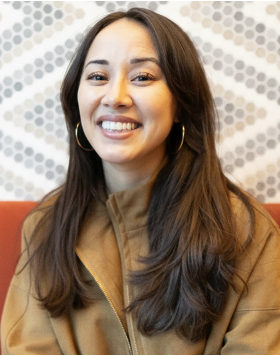
CAMBRIDGE, Mass. — Cellino, a regenerative medicine company developing autonomous manufacturing systems for personalized cell therapies, said co-founder Marinna Madrid has expanded her role to Chief Product and Regulatory Officer and has been appointed to the company’s Board of Directors.
The newly created position reflects Madrid’s leadership in building AI-integrated biomanufacturing systems and her growing role in shaping how artificial intelligence will be regulated in cell therapy production.
Madrid co-founded Cellino with the view that artificial intelligence and biology would converge to create manufacturing systems capable of outperforming manual processes. She helped build the company’s platform by integrating image-based machine learning, laser processing, and stem cell biology to enable the production of patient-derived cells with greater precision and consistency than traditional approaches.
Cellino’s platform relies on closed-loop, AI-driven systems that monitor, analyze, and optimize cell manufacturing in real time. The system continuously learns from each patient process, enabling decisions at speeds and scales beyond human capability while maintaining the precision required for personalized medicine.
“When we started Cellino, the idea that AI would be foundational to cell therapy manufacturing felt like a reach,” Madrid said. “Now it’s obvious. The question has shifted from whether AI belongs in biomanufacturing to how we deploy it responsibly at scale. That’s the challenge I’m most excited to take on: building both the technology and the regulatory infrastructure to bring these therapies to millions of patients.”
Madrid has also played a central role in the company’s regulatory strategy. In May 2025, she led Cellino to secure the U.S. Food and Drug Administration’s Advanced Manufacturing Technology designation, making Cellino the first induced pluripotent stem cell-based technology to receive the designation. The milestone validated the company’s AI-driven approach and is expected to accelerate the regulatory pathway for therapies produced on its platform. She is now working with regulatory agencies globally on frameworks for the integration of AI into cell therapy manufacturing.
“I’m thrilled to welcome Marinna to the board. One of the things I look for is whether a founder’s scope expands with the opportunity in front of them,” said Chris Gibson, Ph.D., a Cellino board member and co-founder and chairman of Recursion. “Marinna built Cellino’s manufacturing platform on a thesis that proved exactly right, that AI and biology would converge to outperform manual processes. Now she’s shaping how regulators worldwide will govern AI in cell therapy. That trajectory is rare, and the board will benefit enormously from her perspective.”
Madrid’s background spans physics, engineering, artificial intelligence, laser optics, robotics, and stem cell biology. She holds a Ph.D. in applied physics from Harvard University, where she co-invented laser-based intracellular delivery techniques. She holds multiple patents related to physics-based cellular manipulation technologies and serves as a founding or invited member of several industry and scientific organizations focused on cell therapy manufacturing, clinical translation, and regulatory standards.