

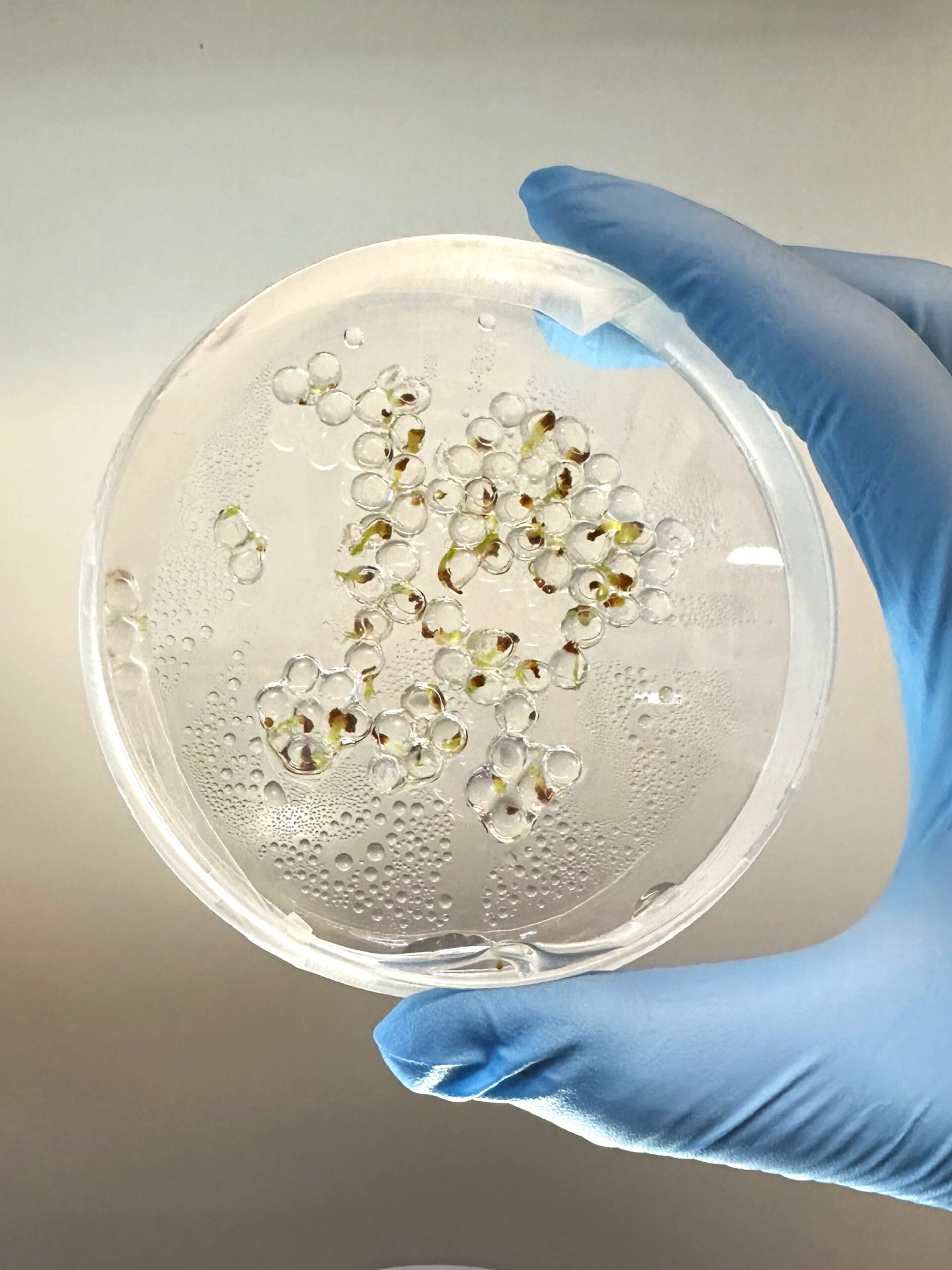
CAMBRIDGE, Mass. — Foray Bioscience has entered into its first fabricated seed commercialization partnership, teaming up with West Coast Chestnut to accelerate the propagation of new chestnut varieties using plant cell-based technology.
Foray is developing “fabricated seeds,” which are encapsulated plant embryos grown directly from single plant cells and designed to be sown like conventional seeds. The approach is intended to enable scalable propagation while significantly reducing the time required to bring new plant varieties to market.
Under the multi-year agreement, Foray will develop fabricated seeds for select chestnut cultivars, with the goal of shortening production timelines by enabling rapid bulking and minimizing acclimatization steps that typically slow traditional propagation methods. The partnership also includes a forward purchase agreement for fabricated seeds of regionally important chestnut varieties and positions West Coast Chestnut as a key collaborator in validating additional products for reforestation efforts in the Pacific Northwest.
West Coast Chestnut brings experience in tissue culture propagation, orchard development, and tree crop farming, making it an early partner well suited to pilot the fabricated seed technology.
“We’re excited to work with Foray to explore a new way of scaling chestnut propagation,” said Sawyer Clark of West Coast Chestnut. “We’ve spent years working chestnut cultivars into tissue culture and preparing them for growers, but propagation remains slow and capital intensive. Fabricated seeds have the potential to unlock a pathway that is faster, more predictable, and designed to scale.”
Foray said the agreement reflects growing demand for technologies that can modernize and speed up plant propagation, particularly for species where consistency and large-scale production have historically been difficult to achieve.
“This work represents a shift in how plants can be scaled,” said Dr. Ashley Beckwith, founder and chief executive officer of Foray Bioscience. “By combining plant cell culture, AI-directed experimentation, and fabricated seed technology into a single platform, we’re turning propagation into a predictable, repeatable process designed to unlock reliable supply across many plant species.”
The partnership builds on Foray’s broader platform strategy, which integrates physical bioproduction capabilities with its AI-enabled research and development software to systematically develop, optimize, and reproduce plant growth processes across a range of species and applications.