

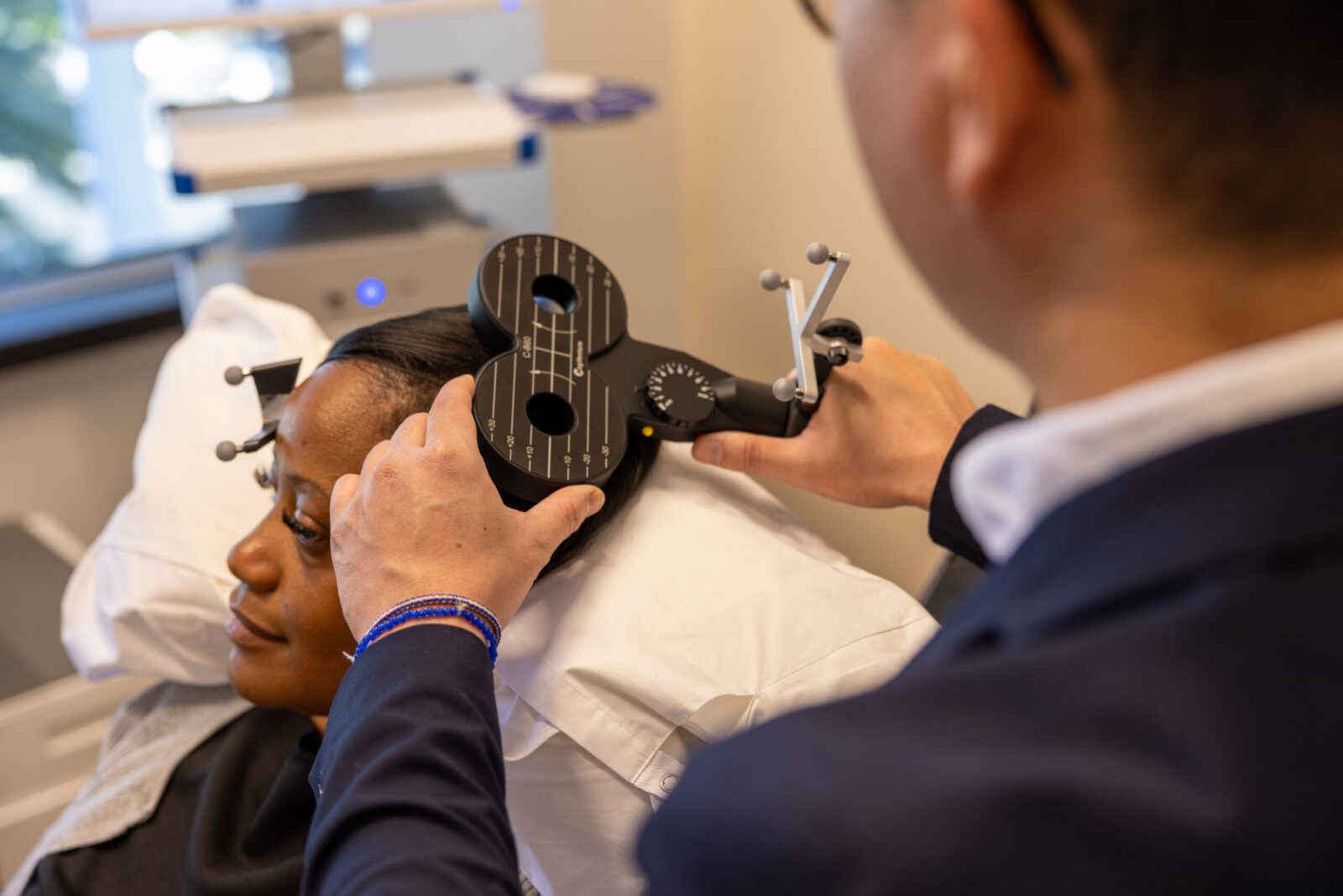
WORCESTER, Mass. — Magnus Medical has enrolled the first patient at University of Massachusetts Chan Medical School in a U.S. Department of Defense-funded, multi-center pivotal clinical trial evaluating the safety and effectiveness of its SAINT neuromodulation therapy for the treatment of postpartum depression.
The enrollment marks the operational launch of an $11.6 million randomized controlled trial designed to assess whether SAINT, a non-invasive and FDA-cleared treatment for major depressive disorder, can provide rapid, safe, and durable symptom relief for women experiencing depression following childbirth.
The study will enroll up to 192 women between the ages of 18 and 45 who are diagnosed with a major depressive episode with peripartum onset, the clinical diagnosis for postpartum depression. Eligible participants may be up to 12 months postpartum and include women with moderate to severe symptoms, regardless of whether they have previously failed antidepressant or psychotherapy treatments. Participants may also continue stable antidepressant medication or psychotherapy during the trial.
“This first enrollment at UMass Chan represents an important step forward in translating precision neuromodulation to a population with urgent, unmet needs,” said Brandon Bentzley, M.D., Ph.D., co-founder and chief scientific officer of Magnus Medical and the study’s principal investigator. “Postpartum depression is devastating, yet current treatments are often too slow or burdensome for new mothers. SAINT therapy has already demonstrated the ability to rapidly lift depressive symptoms without systemic side effects, offering hope for a safer and faster option.”
Bentzley added that the trial will rigorously evaluate SAINT as a non-drug intervention for postpartum depression while supporting the Department of Defense’s mission to advance innovative therapies for vulnerable populations, including new mothers in military families.
SAINT therapy was commercially launched in April 2024 following clinical studies showing rapid symptom improvement and high remission rates in patients with treatment-resistant major depressive disorder. Unlike antidepressant medications, SAINT does not involve systemic drug exposure, a factor that may be particularly relevant for breastfeeding mothers who are concerned about medication transfer to infants.
Postpartum depression affects an estimated 500,000 women in the United States each year, with prevalence increasing significantly over the past two decades. The condition can have serious consequences for maternal health and early mother-infant bonding. Existing treatments, including antidepressants and psychotherapy, may take weeks to show benefit and are not effective for all patients.
The trial is being conducted across four academic medical centers: University of Massachusetts Chan Medical School, the Medical University of South Carolina, Dell Medical School at The University of Texas at Austin, and the Icahn School of Medicine at Mount Sinai.
The research is supported by the Assistant Secretary of Defense for Health Affairs through the Peer Reviewed Medical Research Program under an award totaling $11,619,193. Opinions and conclusions expressed are those of the investigators and do not necessarily reflect the views of the Department of Defense or the U.S. government.