

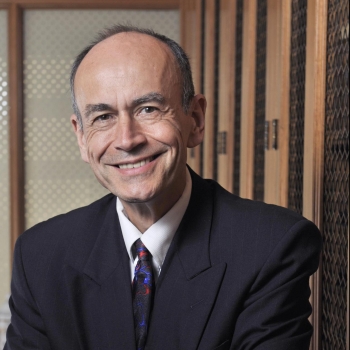
CAMBRIDGE, Mass.– NeuraLight, a company focused on developing precision biomarkers for neurological disease, said it has expanded its Scientific Advisory Board with the addition of Nobel Prize-winning neuroscientist Prof. Thomas Südhof and the appointment of world-renowned neurologist Prof. Olivier Rascol as head of the board.
Südhof, a 2013 Nobel laureate recognized for his work on the mechanisms of synaptic transmission, is one of the world’s leading Alzheimer’s disease researchers and currently heads the Südhof Lab at Stanford University. He also serves as a scientific co-founder of NeuraLight and will oversee the scientific foundations of the company’s biomarkers, supporting continued work across Alzheimer’s disease and other neurological indications.
Rascol, a co-creator of the Movement Disorder Society–Unified Parkinson’s Disease Rating Scale (MDS-UPDRS), brings more than three decades of leadership in Parkinson’s disease clinical research. A professor of clinical pharmacology at Toulouse University Hospital, he has played a central role in shaping how disease progression is measured and how treatments are evaluated in neurodegenerative disorders. At NeuraLight, he will guide scientific strategy and help expand the clinical utility of the company’s platform as its precision biomarkers scale across therapeutic areas.
The Scientific Advisory Board also includes Prof. Alvin Roth, a 2012 Nobel laureate in economics, known for his work in market design, including applications in health care. A professor of economics at Stanford University, Roth is advising NeuraLight on market design, value-based partnerships with healthcare stakeholders and broader ecosystem strategy.
According to the company, the collective expertise of the board supports its validation-first approach, which has produced movement-based disease progression measures with significantly higher sensitivity than existing clinical scales. Board members will contribute to advancing NeuraLight’s clinical validation roadmap, supporting pharmaceutical trial integration and guiding the expansion of precision progression measurement at scale.
“We are thrilled and honored to welcome some of the world’s most recognized and impactful scientists to the board,” said Edmund Ben-Ami, NeuraLight’s CEO and co-founder. “They will be invaluable in advancing our clinical validation strategy and pharmaceutical partnerships. We see this as further confirmation that our platform can truly transform the way disease progression is measured.”
NeuraLight’s platform is built on longstanding research linking brain function and eye movement. The company has developed a 10-minute assessment conducted on a standard tablet that generates biomarkers designed to detect disease changes that traditional methods may miss. The technology is currently deployed in clinical partnerships worldwide, involving more than 1,200 patients with Parkinson’s disease, amyotrophic lateral sclerosis, multiple sclerosis and Huntington’s disease, as well as in multiple pharmaceutical trials.
“I have been impressed by the quality of NeuraLight’s validation data,” Rascol said. “Clinical scales are useful but often noisy, and imaging is costly and complex. That’s why I’m excited by NeuraLight’s eye-movement biomarkers; they provide objective, quantitative measures of disease severity and can detect subtle changes in disease progression missed by traditional clinical assessments.”
Supporting the company’s clinical strategy alongside the advisory board are several scientific advisors, including Cristina Sampaio, Chief Medical Officer of the Cure Huntington’s Disease Initiative Foundation and a professor of clinical pharmacology and therapeutics at the University of Lisbon; Prof. Fred Lublin, director of the Corinne Goldsmith Dickinson Center for Multiple Sclerosis at Mount Sinai Medical Center in New York; and Dr. Chris Goetz, co-creator of the MDS-UPDRS and director of the Movement Disorders Program at Rush University Medical Center.