

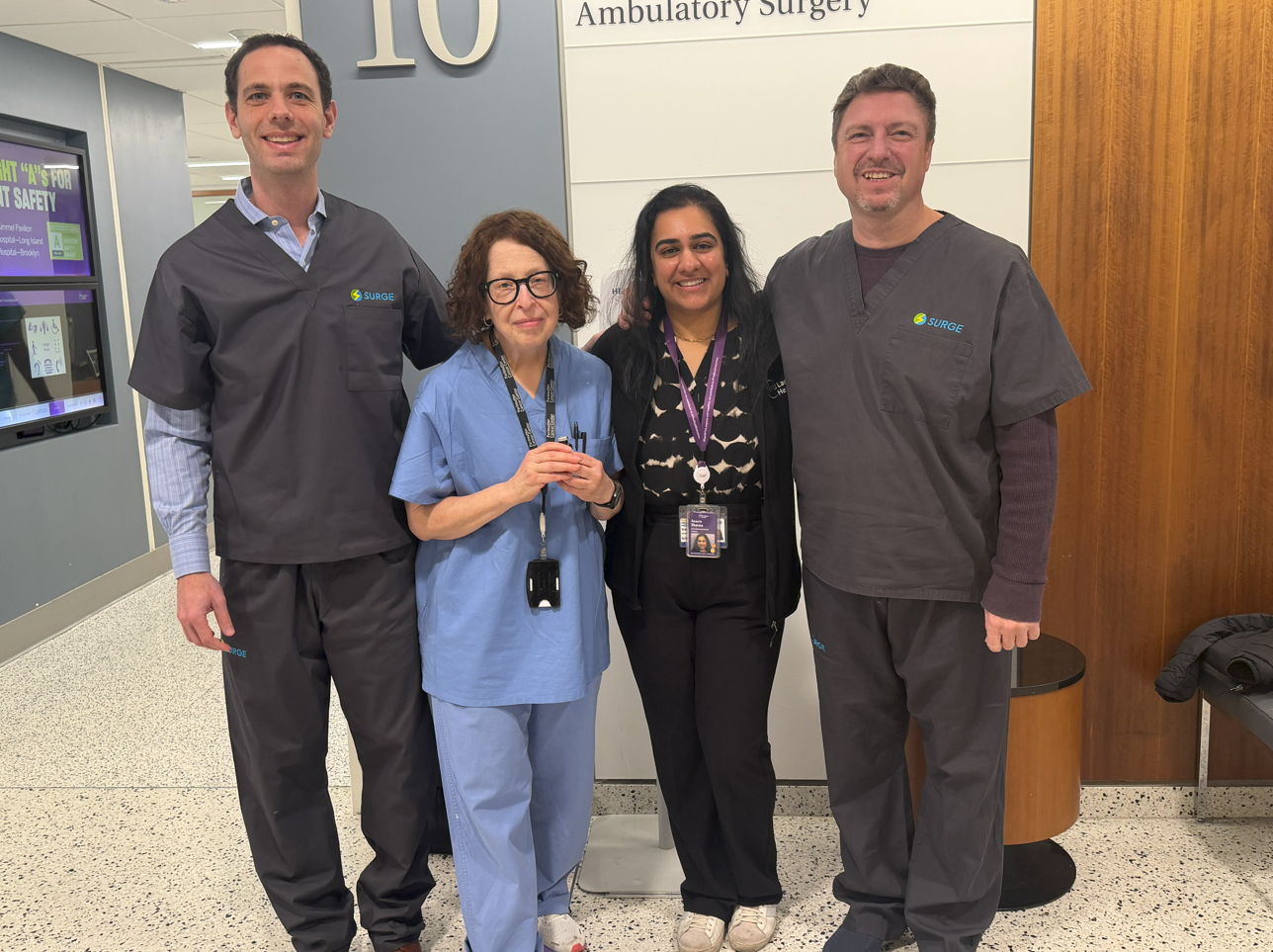
CAMBRIDGE, Mass. — SURGE Therapeutics said it has completed dosing of the final patient in its Phase 1 clinical trial evaluating SRG-514, an investigational intraoperative immunotherapy for breast cancer patients undergoing breast-conserving surgery, and is preparing to advance the program directly into a registrational trial following discussions with the U.S. Food and Drug Administration.
The Phase 1 dose-escalation study found that SRG-514 was generally well tolerated, with no treatment-related dose-limiting toxicities or treatment-related serious adverse events reported to date. Based on the data generated so far and regulatory discussions, the company said it is finalizing the design of a registrational trial.
SRG-514 is designed to be administered intraoperatively, delivered directly into the tumor resection cavity at the time of surgery. The therapy aims to reprogram the local inflammatory response from immunosuppressive to immunostimulatory, with the goal of generating a durable, systemic anti-tumor immune response when tumor burden is at its lowest.
“Intraoperative immunotherapy represents a fundamentally different approach to treating cancer,” said Michael Goldberg, Ph.D., CEO and founder of SURGE Therapeutics. “With SRG-514, we are targeting primary drivers of cancer mortality – post-surgical recurrence and metastasis – by improving how, when, and where immunotherapy is delivered. We are encouraged by the data generated to date and by the broader potential of our programs to serve as pipelines-in-a-product.”
SRG-514 is a thermosensitive formulation of ketorolac, a non-steroidal anti-inflammatory drug commonly used in perioperative settings. The formulation is designed to enable extended, localized drug release at the surgical site and may counteract surgery-induced immune suppression, a biological process that can contribute to cancer recurrence and metastasis.
“One of the most persistent challenges in oncology is that microscopic disease can remain even after successful tumor removal and later drive cancer recurrence, both locally and distally,” said Robert Langer, Sc.D., Institute Professor at MIT and chair of SURGE’s Scientific Advisory Board. “Applying established principles of drug delivery in the intraoperative setting creates a powerful opportunity to influence immune responses where and when intervention may have the greatest impact.”
Post-surgical recurrence remains a major unmet need in oncology. An estimated 90 percent of cancer-related deaths are driven by local recurrence and metastasis. Each year, approximately 9 million cancer patients worldwide undergo surgical tumor resection, and about 40 percent experience disease recurrence within five years. Standard post-operative therapies are often delayed for weeks after surgery, a window that may allow residual cancer cells to evade immune surveillance.
SURGE’s approach is built on its proprietary SURGERx platform, which uses an injectable, biodegradable hydrogel optimized for intraoperative administration to deliver drugs at high local concentrations.
The company expects to initiate a registrational trial of SRG-514 in triple-negative breast cancer later this year, with the potential to expand into additional breast cancer and solid tumor indications. In parallel, SURGE is advancing two additional intraoperative immunotherapy programs, STM-416 and STM-416p, which utilize the TLR7/8 agonist resiquimod, in bladder cancer and prostate cancer. Both programs are expected to enter Phase 2 clinical trials in 2026.
SURGE said the programs reflect its broader goal of transforming surgery from a purely physical intervention into a therapeutic opportunity to deliver localized immunotherapy aimed at improving long-term patient outcomes.